DIAL Research
Social & Information Networks
Link prediction is the task of predicting previously unobserved relationships between entities. There are many exciting applications of this particular area of network science. Most research in the area of link prediction has been restricted to scoring based on a single measure within network topologies. Our work is developing a powerful new measure and placing existing measures in the context of a machine learning task. We are also casting the problem as a high-class imbalance task.
Click the title of the project to view the description.
Representing complex systems as graphs: the higher-order network approach
Graphs, or networks, are expressive and flexible structures for representing interactions in complex systems. For example, given the trajectories of ships, a global shipping network can be constructed by assigning port-to-port traffic as edge weights. However, conventional first-order networks only capture pairwise (i.e., first-order Markov) traffic between ports, disregarding the fact that ship movements can depend on multiple previous steps.
The loss of information during graph construction can lead to suboptimal results for downstream learning tasks. Higher-order networks (HONs) remedies this problem by creating conditional nodes, which embed higher-order dependencies in the graph.
For more details, you can visit the seminal project website , read about recent applications of HONs for anomaly detection , analysis of type 2 diabetes comorbidities , and graph neural networks ; or use our Python code to create your own higher-order network.
Encoding Real-World Heterogeneous Graphs to Improve Food Services
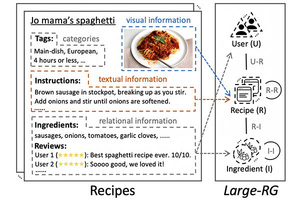
Heterogeneous graphs are ubiquitous in the real world with their ability to model heterogeneous relationships among different types of nodes, such as social graphs and food graphs.
In particular, heterogeneous graphs have shown great promise in the field of recipe representation learning and recommendation. In this context, a heterogeneous recipe graph is a graph structure that captures the relationships between users, recipes, and ingredients.
For example, a user node can be connected to a recipe node if the user has interacted with that recipe (e.g., liked, commented, or saved). Similarly, a recipe node can be connected to an ingredient node if the recipe contains that ingredient.
By building a heterogeneous recipe graph, we can learn a comprehensive representation of recipes. This representation can then be used to recommend recipes to users based on their preferences and past interactions.
In this way, heterogeneous graph-based approaches offer a powerful tool for improving recipe recommendation systems and enhancing the overall user experience.
Influence Drives the Emergence and Growth of Social Networks
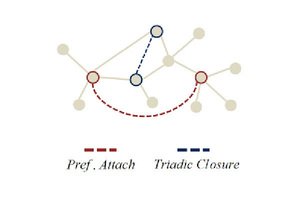
Social influence has been a widely accepted phenomenon in social networks for decades. This includes influence maximization, influence selection and quantification, and influence validation.
Different from existing work, our research focuses on the effects of social influence on the evolution of social networks, aiming to answer whether social influence is a strong force shaping the network dynamics.
The problem is explored from both microscopic and macroscopic perspectives. In microscopic level, we try to answer the question that whether the model derived from social influence propagation mechanism can yield high precision in the link prediction problem.
While from macroscopic perspective, we are also interested to know whether the model hypothesized from social influence spreading is able to explain popular scaling-laws in social networks.
Our objective is to unveil the significant factors with a greater degree of precision than has heretofore been possible, and shed new light on network evolution.
Longitudinal Analysis and Modeling of Large-Scale Social Networks
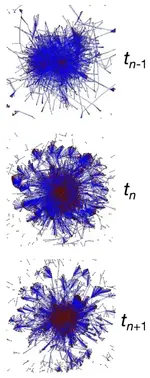
The growth in information technology systems is generating new sources of data on human behavior that are only now beginning to be analyzed.
Digital communications systems log communication events and therefore contain valuable information on usage patterns that can be used to map social networks and analyze human behaviors within them.
The availability of this data of over millions of individuals provides the potential to induce transformative changes in the way we analyze and understand human behavior.
The data generated by digital communication technologies has five key traits that have the potential to transform the way researchers study social networks:
- Quality of statistics (the data comes from millions of users)
- Purely observational (non-obtrusive measurement)
- Complete network data
- Longitudinal (spanning several years)
- Spatial information
Data of such extent and longitudinal character brings with it novel challenges which can only be tackled by a well orchestrated multidisciplinary approach involving network social science, physics methods, mathematical statistics and data analysis, and computer science methods of data mining, community detection algorithms and agent-based modeling.
Understanding Peace Processes through Social Media
Colombia’s final peace agreement was a culmination of a decade-long peace process that outlines significant social, political and economic reforms to end the longest fought armed conflict in the Western Hemisphere.
Peace processes are complex, protracted, contentious and dynamic systems which involve significant bargaining and compromising among various societal and political stakeholders.
Social media yields tremendous power in peace processes as a tool for dialogue, debate, organization, and mobilization thereby adding more complexity by opening the peace process to public influence.
Various indicators such as renunciation of violence during talks, establishing a negotiating agenda and its sequences, public support, and external guarantees can enable us to better understand peace process dynamics and predicting their outcomes.
In this paper, we study two important indicators: inter-group polarization and public sentiment towards the Colombian peace process.
We present a detailed linguistic analysis to detect inter-group polarization and understand differences in signals emerging from polarized groups.
We also present a predictive model which leverages tweet-based, content-based and user-based features to predict public sentiment towards the Colombian peace process as observed through social media.
Connecting the Dots to Infer Followers’ Topical Interest on Twitter
Colombia’s final peace agreement was a culmination of a decade-long peace process that outlines significant social, political and economic reforms to end the longest fought armed conflict in the Western Hemisphere.
Peace processes are complex, protracted, contentious and dynamic systems which involve significant bargaining and compromising among various societal and political stakeholders.
Social media yields tremendous power in peace processes as a tool for dialogue, debate, organization, and mobilization thereby adding more complexity by opening the peace process to public influence.
We present a detailed linguistic analysis to detect inter-group polarization and understand differences in signals emerging from polarized groups.
Language Models
Large language models (LLMs) are neural networks capable of processing and understanding human language that can be used to tackle many complex problems. While the internet has made it possible to collect large amounts of text data that can be used to train and test large language models, unexplored venues and unsolved issues still remain. Our projects in this space focus on efficient information extraction from informal written conversations, applications of LLMs in novel domains, and improving LLMs to be more robust do data issues typically associated with text data.
Click the title of the project to view the description.
Determination of helpful or correct comments in an online forum
We can retrieve valuable information from an online forum discussion. There are complex relationships between individual users and also between each comment. As we all know, there are many comments for each thread in a forum, which can be either helpful or not. We, as humans, intuitively distinguish helpful comments from others. However, this is not always the case. If someone wants some information from a specific domain of knowledge, they wouldn’t easily be able to find those helpful comments unless they are familiar with the area. Because of these difficulties, we might miss some valuable but unstructured and hidden information. However, this research can help us get this information. As a part of the NASA project, this research is now exploring ArduPilot which is an online forum about Unmanned Aircraft Systems (UASs). We use text data which is the contents of each comment, the metadata of each comment such as the length of a comment, and the user stat information. We are experimenting with diverse language embedding models, features, and algorithms for classification. For the next step, we will tackle determining the correct comments even though the existence of the comments is a very rare case. For the threads that contain the correct comment, we can determine the answer to a thread and conclude the discussion.
LLMs and Evidence Synthesis
When it comes to working with scientific papers, defining interventions and their outcomes can be a tricky task even for a human. This process is often hampered by a lack of reliable and accurate data, which can be attributed to the complex manual labeling process involved. However, with the help of semi-automatic data cleaning and binary/ multi-label classification techniques, we can extract meaningful information from large volumes of textual data. To achieve this, we are developing a large language model that can accurately classify and label data, using active learning techniques to continually improve its performance over time. By doing so, we hope to overcome the challenges of accurately recognizing interventions and outcomes mentioned in text, and extract relevant information from reports efficiently. With this approach, we aim to make the process of data cleaning and labeling less cumbersome and more effective.
LLMs and Imbalanced Data
Another project deals with the fact that despite millions of person-hours of research, imbalanced data is still a challenge for supervised learning. This problem affects large language models as well. This can lead to significant biases in these models that play an increasingly larger role in our society. At the same time, the proportion of the target class in text datasets can be extremely low, and this remains in many important datasets. For tabular data, oversampling techniques such as SMOTE are used. However, using this type of oversampling on texts is a hard task, as conventional notions of distance do not apply to text. Our work focuses on developing novel ways to train large language models on a variety of tasks to make them more robust to class imbalance. In our research, we are trying to combine both cost-based approaches that take class distribution into account during LLM training with modern resampling techniques. With these techniques, we try to improve the applicability of LLMs to problems where balanced text datasets are not available.
Interpretable Models
Although its definition remains a bit ambiguous in machine learning literature, interpretability is most often embodied by heuristics such as model size, simplicity, human simulatability, and, above all, the extent to which domain experts can explicitly understand the patterns expressed by a model.
Click the title of the project to view the description.
Interpretable Modeling with Symbolic Regression
Interpretability is especially important for high-stakes settings, such as healthcare, in which users need to trust model predictions, maintain transparency to patients and stakeholders regarding decision-making, and design better processes geared toward improving patient outcomes.
Our recent publications on the topic of interpretability include a tutorial on symbolic regression in the context of human health, in which we use QLattice Symbolic Regression software to find explicit mathematical functions to estimate body composition as alternatives to existing heuristics, such as body mass index (BMI), using accessible body measurement variables collected by the Center for Disease Control and Prevention (CDC) .
Health & Wellness
Faced by enormous health care costs and an unsustainable system, more efficient medical practices are needed. Our work addresses this problem from both ends of the healthcare informatics spectrum. On one end, we have focused on the development of analytical models and statistical analysis ranging from lowest levels of personalized care, clinical data, to the highest level of population data to gain additional insights and perspectives into a clinical environment. On the other end of the spectrum our work focuses on the development of technologies aimed understanding technology’s role in addressing community based health and wellness problems.
Click the title of the project to view the description.
Pediatric Cancer
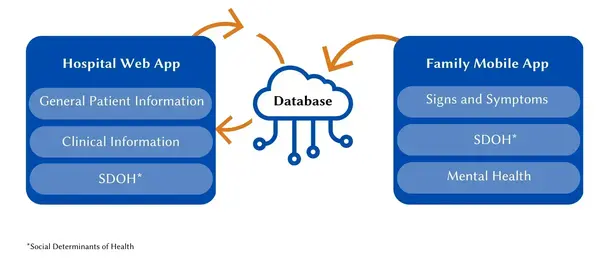
Low- and middle-income countries (LMICS) are predicted to contain two thirds of the world’s cancer incidence by 2024. Mexico, in particular, has shown an especially high incidence of pediatric cancer rates, projecting 6,778 new cases by 2025, making it the 2nd highest incidence in Latin America, according to the World Health Organization (WHO).
These statistics have motivated our collaboration with the Hospital Infantil de México Federico Gómez, a pediatric oncology institution in Mexico City who primarily serves disadvantaged populations with limited access to health services.
Due to a lack of electronic medical records (EMRs), we have designed and built a dual web and mobile application to track clinical information in combination with social determinants of healthcare access from hospital staff and patient caregivers throughout patients’ oncology trajectories, both in the hospital and in the home setting.
This data will be used to build models for predicting adverse outcomes (e.g. febrile neutropenia, septic shock, bacteremia, bleeding, death) in this vulnerable population, adding onto our preliminary modeling work regarding a subset of these adverse events.
The goal is to learn the meaningful relationships between these variables, which may illuminate pathways for better care, treatment, and service to these patients and families.
Childhood Obesity
There are many isolated interventions dealing with childhood obesity today. Some focus on educating children, while others focus on getting kids active.
This work, however, aims to use a collective impact intervention to unite these different areas. As a pioneer in this type of collective impact programming, the United Way aims to leverage many different community programs, some previously validated, such as CATCH, and others new and upcoming, such as prescription to play.
Our work is to create a social wellness platform that will allow children to set and track wellness goals, as well as provide them feedback for progress and information pertaining to their specific interests.
The ability to monitor progress is central, with the goal of showing users information on their improvement, not just their successes or failures.
The platform also encourages users to join controlled social groups within classes and friends to challenge each other for improved performance and to reinforce positive behaviors.
Diabetes Risk and Management
Chronic diseases such as diabetes take a great deal of personal commitment and awareness to manage effectively.
We understand that every individual is unique, and there may be many causes for these difficulties. However the current practice of retroactively treating this issues is both expensive and less effective than early action treatment.
However we understand that in the challenging healthcare environment today creating wide spread interventions for all diabetic patients is not a practical solution.
We believe that through the integration of technology and data mining into patient care we can augment the move away from this reactive paradigm to a preventative care model.
Through a combination of personalized features we aim to identify those individuals at high risk for management issues. We then intend to determine a personalized course of action based on the resources available to that individual.
Population-Level Analysis
Utilizing population-level data we have undertaken a higher-level data science analysis drawing on the Center for Medicare and Medicaid Service (CMS) national public physician dataset.
We aimed to open the discussion into how data from multiple sources, such as the CMS Medicare release, existing CMS datasets as well as additional external public data can be utilized to generate insights into new and interesting questions around clinical practice.
This work focused on the concept of knowledge transfer and how experiences during education can shape a physician over the course of their career, posing the question: does a physician’s past experience in medical school shape their practicing decisions?
Gerotechnology
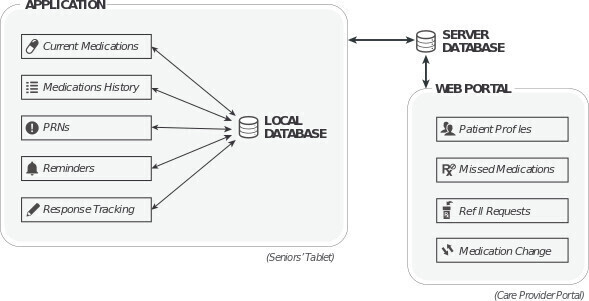
As healthcare becomes increasingly digitalized, we have been working to blend technology with society by developing a healthcare application that can help seniors live better.
Our tablet-based application, aimed at enhancing the physical health, vitality, and brain fitness of seniors residing in independent living communities, is a patient-centric framework for medication, nutrition, and pain management designed specifically for senior patients.
To help patients manage chronic diseases, the application provides alerts for daily medications and information on medical appointments.
The application can also be used as a medium to provide community health workers with discharge summaries.
In collaboration with a local Aging in Place program, we have been conducting a study of the application and its effects on senior well-being.
Through the study, we investigate conditions indicative of risks or trends in patient health, including questions relating to exercise, diet, mood, and sleep patterns.
Online Health and Wellness Information Consumption

Users are rapidly leveraging the Internet as a viable source of health information.
In this research, we study the health-seeking behavior of users on a national health and wellness-based knowledge sharing online platform.
We begin by identifying the topical interests of users from different content consumption sources.
Using these topical preferences, we explore information consumption and health-seeking behavior across three contextual dimensions: user-based demographic attributes, time-related features, and community-based socioeconomic factors.
We then study how these context signals can be used to infer specific user health topic preferences.
Our findings suggest that linking demographic features to user profiles is more effective in predicting health preferences than other features.
Our work demonstrates the value of using contextual factors to characterize and understand the content consumption of users seeking health and wellness information online.
NetHealth
The NetHealth Study is exploring the extent to which healthy behaviors can be promoted through social networks.
This is currently being conducted by using smartphones to gather information on people’s social networks and Fitbit activity trackers to gather information on people’s physical activity and sleep patterns.
Over seven hundred Notre Dame students are currently enrolled in the study who entered as first-years in the 2015/16 academic year.
MomLink
MomLink is a research project consisting of a web and mobile application that will help first-time moms access pregnancy-related educational resources and acquire timely and personalized information related to their pregnancy.
The application will also allow them to communicate directly with their prenatal care coordination team, receive information, and track their progress.
Pandemic Forecasting
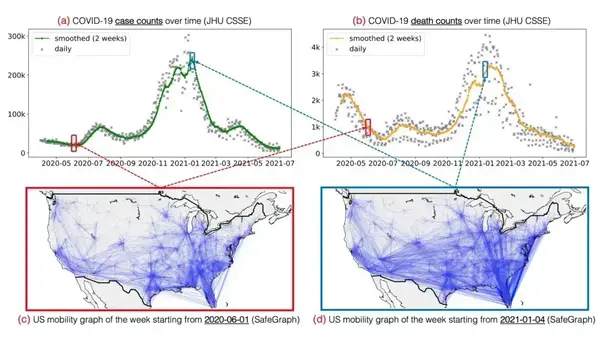
The spread of COVID-19 throughout the world has led to cataclysmic consequences on the global community, which poses an urgent need to accurately understand and predict the trajectories of the pandemic.
In epidemiology, mass human mobility data (i.e., how many people moved from one place to another in a given period) has demonstrated its predictive power as infectious diseases are spread through human-to-human transmission.
Due to the natural graph structure of human mobility data, various graph neural networks (GNNs) have been proposed to predict pandemic trajectories.
Environment & Climate
The network structure and evolution over time provide interesting insights into the behavior of the Earth’s environmental and climatic systems. For example, ocean climate indicators extracted from the networks have proven to be good predictors of climate variables over land. Currently, we are studying the dynamic behavior and stability of the network over time.
Click the title of the project to view the description.
Patterns of Ship-Borne Species Spread
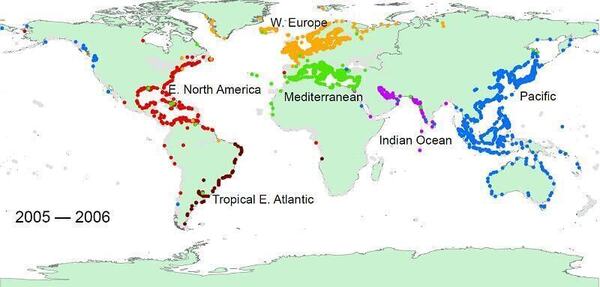
The spread of non-indigenous species (NIS) through the global shipping network (GSN) has enormous ecological and economic cost throughout the world.
Previous attempts at quantifying NIS invasions have mostly taken “bottom-up” approaches that eventually require the use of multiple simplifying assumptions due to insufficiency and/or uncertainty of available data.
By instead modeling implicit species exchanges via a graph abstraction that we refer to as the Species Flow Network (SFN), we pursue a different approach that exploits the power of network science methods in extracting knowledge from largely incomplete data.
Education
Click the title of the project to view the description.
Predicting STEM Student Retention
As providers of higher education begin to harness the power of big data analytics, one very fitting application for these new techniques is the prediction of student attrition. The ability to pinpoint students who might soon decide to drop out of a given academic program allows those in charge to not only understand the causes for this undesired outcome but also provides room for the development of early intervention systems. While making such inferences based on academic performance data alone is certainly possible, we claim that in many cases there is no substantial correlation between how well a student performs and his or her decision to withdraw. To address this issue, we aim to derive measurements of engagement from students’ electronic portfolios and use these features to augment the predictions of student attrition.
Identifying Students of Concern in The First Year of Studies Course
The First Year of Studies (FYS) is a required course offered in the flipped classroom format that undergraduate students entering the university need to take and pass in the first year. Thus, it is important to identify students who might fail the course or drop out of it so that the instructors can intervene and help them. Since the classroom is in the flipped format, students have to access the reading content and attempt homework quizzes online before attending the lecture. While pedagogical methods relying on grades exist to identify such students by the middle of the semester, with the power of big data we can now find better predictive markers by leveraging not only their grades but also their clickstream data, ePortfolio, and homework submissions.
Predicting Student Dropout in MOOCs
In an effort to bring education to people without access to a teacher or the time to attend formal classes, Massive Open Online Courses (MOOCs) are being offered by universities on various MOOC platforms like edX. However, the problem of student attrition in MOOCs is very persistent across MOOCs with 90% or more students who end up dropping out of the course. In order to understand this phenomenon, we use machine learning techniques to study the behavior of students in discussion forums, patterns in video clickstreams, their performance in homework assignments and exams, as well as the emotions of students through surveys.
This research has been generously supported by the National Science Foundation, National Institutes of Health, Defense Advanced Research Projects Agency, U.S. Army Research Laboratory, U.S. Department of Energy, U.S. Department of Justice, National Institute of Justice, U.S. Department of Defense, Battelle Memorial Institute, United Way Foundation, Memorial Hospital of South Bend, Indiana CTSI, Oak Ridge National Laboratory, NET Institute, and several industry partners.