tag:data-ai-computing.nd.edu,2005:/news-and-events/newstag:data-ai-computing.nd.edu,2005:/latestData, AI, and Computing Initiative | News2026-07-29T11:45:00-04:00Explore Notre Dame's groundbreaking research in artificial intelligence and its impact on society.tag:data-ai-computing.nd.edu,2005:News/1834122026-07-29T11:45:00-04:002026-07-29T12:17:07-04:00Notre Dame launches Data, AI, and Computing Initiative to unify emerging technology research, education, and academic servicesThe Main Building and Basilica of the Sacred Heart at sunset. (Photo by Michael Caterina/University of Notre Dame)
As artificial intelligence (AI) reshapes how we interact and operate within society, the University of Notre Dame is expanding its institutional approach to data, AI, and computing through a coordinated strategy focused at the intersection of research, education and societal impact.
Notre Dame’s Data, AI, and Computing (DAC) Initiative outlines a multi-year, campus-wide effort to position the University as a trusted leader in emerging technologies. The Initiative convenes discussions and action for research, education and impact across colleges, schools, centers, and disciplines in support of Notre Dame’s broader strategic framework.
Directed by Nitesh Chawla, the Frank M. Freimann Professor of Computer Science and Engineering and the Lucy Family Director for Data & AI Academic Strategy, the DAC Initiative brings together several existing University strengths under a unified institutional structure. This new framework includes the Lucy Family Institute for Data & Society, the Scientific AI Initiative, and specialized labs in residence spanning fundamental research and interdisciplinary applications, also guided by the dimensions of responsible, inclusive, safe, and empowering (RISE).
Additionally, research software engineers and data scientists from the Center for Research Computing and the Applied Analytics & Emerging Technology Lab will form a new Deployment, Operations, Modeling, and Engineering (DOME) unit to support data and AI research across the University.
The effort reflects both the accelerating pace of AI adoption and the growing need for universities to prepare students for an economy and society increasingly shaped by data and computation.
“Data and AI-driven technologies are transforming nearly every sector of society,” said David Go, vice president and associate provost for academic strategy. “Notre Dame’s distinctive strength lies in combining technological fluency in these emerging tools with a Catholic intellectual tradition that integrates faith and reason for the common good.”
At the center of the Initiative’s educational efforts are the DAC curricular activities, which explore how data, AI, and computational approaches could be integrated into curriculum and learning across undergraduate and graduate education. The work includes evaluating new interdisciplinary courses and degree programs that complement existing offerings, as well as ensuring support for faculty innovation and establishing long-term structures that allow curricular growth to scale across departments and colleges.
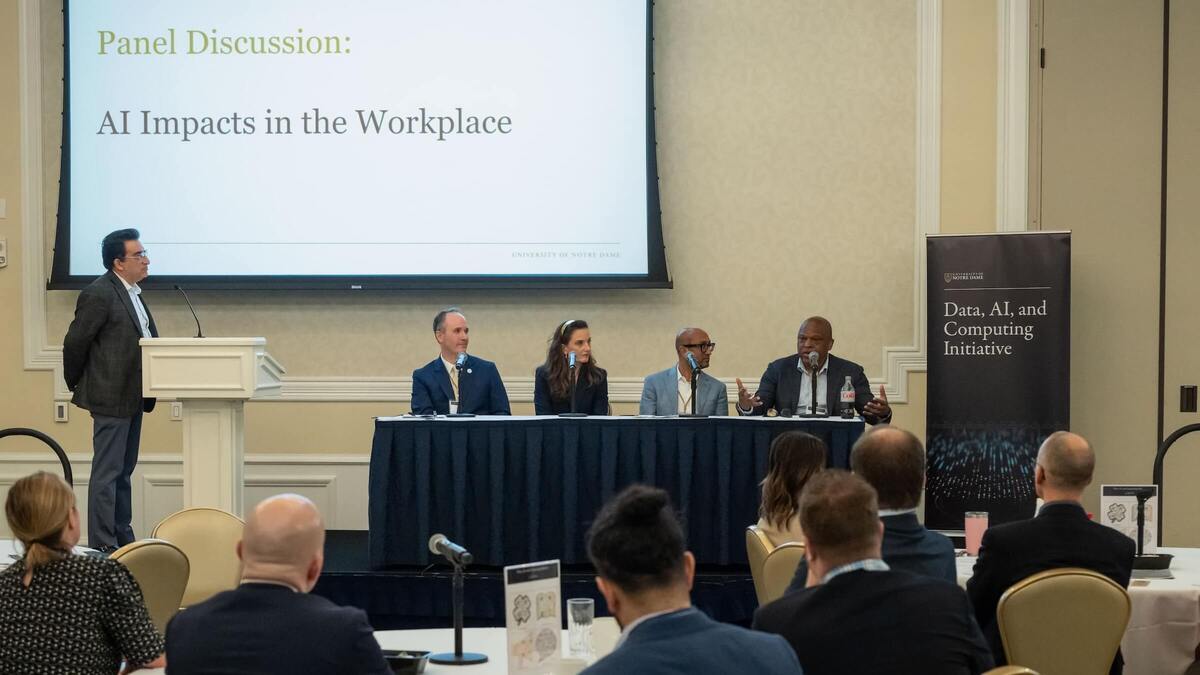
During an Initiative-hosted Industry Leaders Roundtable, University faculty and industry professionals convened to discuss the urgent need for graduates to have technical fluency combined with durable skills like adaptability and communications to navigate an increasingly AI-driven career pipeline.
“Through our conversations with industry leaders, we’re hearing a consistent message: AI is becoming part of nearly every role and every industry,” said Corey Angst, the Jack and Joan McGraw Family Professor of IT, Analytics, and Operations. “That’s why Notre Dame is expanding opportunities for students to build AI and analytics skills while also strengthening the critical thinking, communication and ethical judgment that employers continue to value most.”
Beyond curriculum development, the Initiative supports a research ecosystem of working groups spanning RISE AI, foundational methods, AI-enabled science and engineering, computational social science, health, and digital humanities. Several of these working groups also contribute to research discussions that work to leverage AI to reduce poverty, improve sustainability, address health access, and promote democracy.
“Data, AI, and computing are already shaping the future,” said Chawla. “Through the DAC Initiative, we’re helping shape that future with purpose by uniting expertise across disciplines to advance discovery that serves society, prepare students for an AI-enabled world, and ensure that technological progress remains responsible and deeply human.”
For more information about the Data, AI, and Computing Initiative, visit data-ai-computing.nd.edu.
Contact: Brandi Wampler, associate director of media relations, 574-631-2632, brandiwampler@nd.edu
Originally published by Christine Grashorn at news.nd.edu on July 29, 2026.
]]>
Christine Grashorntag:data-ai-computing.nd.edu,2005:News/1832802026-07-22T10:16:00-04:002026-07-22T10:16:24-04:00AI and materials research initiative accelerates breakthroughs in material discovery through machine learningSobin Alosious (Photo by Matt Cashore/University of Notre Dame)
The rapid expansion of artificial intelligence (AI) data centers around the world is intensifying a vexing problem: what to do with the vast amounts of heat generated by the powerful chips that drive AI. And the challenge is not limited to the technology industry. Across transportation, manufacturing, consumer electronics, and other sectors, vast amounts of thermal energy are generated and wasted every day, making heat management an increasingly important challenge for modern energy systems.
“Heat is often treated as a byproduct, but it’s really an energy resource,” said Sobin Alosious, a postdoctoral researcher in Lucy Family Institute for Data & Society‘s Artificial Intelligence (AI) & Materials Initiative at the University of Notre Dame. “By understanding how materials store, transfer, and release heat, we can design better materials that improve energy efficiency across a wide range of technologies.”
Now, researchers in the Initiative are using AI to identify materials capable of doing exactly that.
Through work led by Tengfei Luo, Dorini Family Professor of Aerospace and Mechanical Engineering, Meng Jiang, Associate Professor of Computer Science and Engineering, and Alosious, the Initiative is creating machine learning (ML) frameworks to accelerate the discovery of advanced materials. Machine learning enables computers to learn patterns from existing data and apply those patterns to make predictions about new materials. The researchers combine experimental results with simulations and physics-based estimates to identify promising materials more efficiently.
A multi-fidelity transfer learning framework integrates group contribution, molecular dynamics, and experimental data to enable accurate and scalable prediction of polymer specific heat capacities. Polym. Chem.. 2026;17(10):1028-1051. doi:10.1039/d5py01039j
A recent publication from the team demonstrates a transfer learning approach, where ML models learn from other relevant datasets to predict polymer heat capacity. Polymers, a class of materials composed of long chains of repeating molecular building blocks and commonly used in technologies such as lithium-ion batteries and computer chip packaging, are critical for thermal applications. Heat capacity plays an important role in thermal energy storage, waste heat recovery, electronics cooling, and battery thermal management, but accurately measuring it can be costly, and computational predictions often require tradeoffs between speed and accuracy.
To overcome these limitations, the researchers developed an ML framework that combines experimental measurements, which are scarce, with large datasets generated through molecular dynamics simulations. Molecular dynamics simulations are much cheaper to generate than experimental measurements because they use computer models instead of laboratory testing, but the resulting data are less precise because the simulations rely on simplified representations of real-world molecular behavior. By extracting useful information from lower-cost data sources before refining it with smaller collections of high-quality experimental data, the model improves prediction accuracy while reducing reliance on expensive experiments.
The results demonstrate the power of integrating multiple datasets of varying accuracy and cost to build highly accurate surrogate models in materials science. By leveraging information across multiple sources, the framework helps overcome one of the most persistent limitations in polymer informatics: the scarcity of experimentally measured property data.
The study also reflects a broader strategy within the AI & Materials Initiative to accelerate materials discovery through data-driven tools. To generate the large datasets needed for ML, the team developed ADEPT, an automated molecular simulation engine that rapidly converts polymer structures into atomistic models and predicts material properties.
Building on these capabilities, the researchers created PolyGraphMT, a graph neural network framework that integrates experimental and computational data of varying quality to identify structure–property relationships across a wide range of polymer characteristics, including thermal, mechanical, transport, electronic, and optical properties. The resulting framework has been used to screen approximately 13,000 known polymers as well as nearly one million virtual polymers, generating tens of millions of property predictions.
To make these capabilities accessible to researchers, the team developed an integrated polymer discovery platform that combines property prediction, AI-assisted screening, literature support, and automated simulation preparation in a single workflow. Researchers can define application-specific design goals and constraints, and the platform rapidly identifies high-confidence candidate polymers from a library of more than one million materials for further simulation and experimental evaluation.
Together, ADEPT, PolyGraphMT, and the polymer discovery platform form an integrated discovery pipeline that links automated simulation, machine learning, candidate screening, and higher-fidelity validation to continuously improve the design of advanced materials.
“The AI & Materials Initiative is creating a new paradigm for materials discovery,” said Luo, who also leads the University’s MÖNSTER Lab (MOlecular/Nano-Scale Transport & Energy Research Laboratory). “We are developing platforms that continuously generate data, learn from that data, and use those insights to guide the new discovery.”
By integrating physics-based modeling, data generation, and AI into a single workflow, the Initiative aims to transform materials discovery from a slow, sequential process into a scalable engine for innovation.
“The real opportunity is enabling scientists to explore materials spaces that would be impossible to investigate experimentally alone,” said Nitesh Chawla, the Frank M. Freimann Professor of Computer Science and Engineering and Lucy Family Director for Data & AI Academic Strategy, who leads Notre Dame’s Data, AI, and Computing Initiative. “Through efforts that bring together data, artificial intelligence, and computing, we are building a foundation for discovery at scale, where AI helps identify the most promising directions and reduces the time from idea to application.”
To learn more about the AI & Materials Initiative, please visit the Lucy Family Institute for Data & Society website.
Contact:
Christine Grashorn, Program Director, Engagement and Strategic Storytelling Lucy Family Institute for Data & Society / University of Notre Dame cgrashor@nd.edu / 574.631.4856 lucyinstitute.nd.edu / @lucy_institute
About the Lucy Family Institute for Data & Society
Guided by Notre Dame’s Mission, the Lucy Family Institute adventurously collaborates on advancing data-driven and artificial intelligence (AI) convergence research, translational solutions, and education to ethically address society’s vexing problems. As an innovative nexus of academia, industry, and the public, the Institute also fosters data science and AI access to strengthen diverse and inclusive capacity building within communities.
]]>
Grashorn, Christinetag:data-ai-computing.nd.edu,2005:News/1833662026-07-20T14:05:00-04:002026-07-27T14:05:12-04:00Researcher shows how AI can personalize learning for homeschooling familiesA mother works with her daughter on a lesson. A new study co-authored by a Notre Dame researcher explores how AI can support priorities of homeschooling parents, including adaptable routines, value-aligned materials and community-based support.
More than 3.4 million American children, or about 6 percent of the school-age population, now learn at home, and that group has grown at nearly three times the pre-pandemic rate. Homeschooling is also increasingly popular in countries including Canada and the United Kingdom, as more parents look to customize educational options for their children.
A new study co-authored by University of Notre Dame researcher Mohammad Rashidujjaman Rifat shows how artificial intelligence can empower parents to be engaged educators who tailor curriculums and learning plans that meet their children’s needs.
“School-centered platforms optimize for classroom control, standardized pacing and scale, but homeschooling families often prioritize adaptable routines, value-aligned materials and community-based support,” said Rifat, assistant professor of tech ethics and global affairs at Notre Dame’s Keough School of Global Affairs. “We wanted to build something that keeps parents in control as reflective partners who shape what their children actually learn.”
Rifat and his colleagues designed a digital platform powered by a large language model. Their goal was to accommodate a diverse cohort of homeschooling families whose needs range from academic flexibility and cultural alignment to school safety concerns. During the study, they worked with Muslim families in the greater Toronto area, evaluating the platform’s usability and overall effectiveness from April to July 2025. Over time, they hope to work with larger groups in multiple communities.
Researchers designed the platform, called Homeroom, around three goals: supporting parents as active participants who shape their children's education; promoting culturally responsive personalization to help families create identity-affirming learning environments; and facilitating parents’ collaboration within a trusted circle of fellow homeschoolers.
The tool’s workflow enabled participants to brainstorm, create and refine stories for their children’s ethics education and to craft curriculums that incorporated family heritage and cultural norms alongside age-appropriate educational standards.
Findings underscore need for agency, representation
Researchers found that parents embraced a trust-but-verify approach, wanting to preview and edit educational materials before sharing them with their children. That desire for control was especially evident around cultural representation.
Some parents used the platform to fill gaps in available materials, generating stories that reflected their children’s cultural identities. One participant said she would use the tool primarily because heritage stories are difficult to find in libraries and too costly to keep buying. Parents appreciated being able to adjust tone, setting and cultural motifs including familiar foods, holidays and everyday customs until a story felt right for their child.
They also identified a need for precision around cultural values. When one participant asked the platform to generate stories emphasizing humility, she received moralizing narration rather than what she had in mind, which was a set of concrete, everyday practices her children already knew, such as sitting on the floor to eat. The experience pointed to a broader finding: Generic value labels are not enough. Families needed tools to define what those values actually look like in their household.
Researchers also found that participants preferred small, intimate groups over broad forums, which they found made it easier to ask sensitive questions and receive practical feedback. Parents wanted to follow trusted peers, adapt shared lessons while providing clear attribution and retain the option to monetize original content.
In addition, parents asked for tools to reduce administrative workload, including reusable rubrics, a portfolio generator and connections to local events that could feed directly into student records.
Addressing a larger challenge in human-AI collaboration
Mohammad Rashidujjaman Rifat studies how AI can be designed inclusively to serve communities often overlooked by mainstream technology.
The study is a natural extension of Rifat’s broader research agenda, which examines how AI can move beyond one-size-fits-all design to better serve diverse communities with distinct cultural needs and values.
It also addresses the concern that AI risks being sycophantic and simply reinforcing what the user already believes. While that risk is real, Rifat said, well-designed personalization can create space for communities to encounter difference rather than avoid it. Homeroom included features that exposed children to materials from outside their own background precisely for that reason.
“One of the critiques I hear is that we’re building echo chambers,” Rifat said. “But personalization is already happening whether we like it or not. The question is whether we design it in a way that brings communities together or drives them further apart.”
Rifat co-authored the study with Ayla Khan, a student at the University of Toronto Mississauga; Nouran Yahya, a student at the University of Waterloo and a research assistant at the University of Toronto Mississauga during the study; and Samar Sabie, assistant professor at the University of Toronto. The study received funding from the Urban Challenge Grant program at the University of Toronto’s School of Cities.
Originally published by Josh Stowe at keough.nd.edu on July 20, 2026.
]]>
Josh Stowetag:data-ai-computing.nd.edu,2005:News/1832542026-07-15T10:46:00-04:002026-07-21T10:46:27-04:00Is AI better at recognizing faces than you are? Study examines factors that affect accuracyAhmed Abbasi
Facial recognition is now a fixture of modern life, powering everything from national border security to the simple convenience of unlocking a smartphone. However, these advancements bring significant risks to privacy, equity and civil rights.
While AI can now match faces as accurately as humans, the specific logic these algorithms use to calculate similarity remains a “black box” (closed source). To bridge this gap, new research from the University of Notre Dame compared commercial and open-source AI against the judgment of 4,000 human participants.
While humans and AI generally agree on facial similarity, three factors heavily influence accuracy: the race of the participant, the race of the face being viewed and the individual’s natural recognition skill, according to Ahmed Abbasi, the Joe and Jane Giovanini Professor of IT, Analytics and Operations at Notre Dame’s Mendoza College of Business. Abbasi’s research, “The influence of face recognition ability and race on the relationship between psychological and algorithmic similarity,” is forthcoming in the Journal of Applied Research in Memory and Cognition.
This overlap is critical because law enforcement often uses a “human-in-the-loop” system, where an algorithm flags matches and a person makes the final call.
“Humans and AI usually see face similarity the same way,” Abbasi said. “However, people who are naturally better at recognizing faces match the AI’s judgments much more closely — at least 15 percent more often, depending on the model.”
The research also highlighted systemic flaws. AI models often disagree with one another and show decreased accuracy when analyzing races underrepresented in their training data. To test this, researchers used 329 standardized cross-race photos in controlled trials. “Unfortunately, these systemic flaws are grounded in 20-plus years of research in computer vision, making them difficult to easily overcome,” Abbasi said.
Abbasi argues that while we rightfully scrutinize AI for bias, we often overlook human fallibility. “We should be mindful of human recognition limits, especially in high-stakes scenarios like eyewitness testimony,” he said. He noted that while privacy and fairness concerns have led several states to ban automated facial recognition, human error remains a significant, yet less regulated, variable.
The study also underscores the legal dangers of black box systems. It cites State v. Arteaga, a landmark New Jersey case where a court required a police department to disclose an AI’s design so a defendant could properly challenge the evidence.
Ultimately, the research suggests that as we move toward an AI-integrated future, we must evaluate the reliability of both the machine and the human making the final decision.
Abbasi’s co-authors are David Dobolyi from the University of Colorado Boulder, Rachel Leigh Greenspan from the University of Central Florida, Jesse Grabman from New Mexico State University and Chad Dodson from the University of Virginia.
Originally published by Shannon Roddel at news.nd.edu on July 15, 2026.
]]>
Shannon Roddeltag:data-ai-computing.nd.edu,2005:News/1834482026-07-14T10:07:00-04:002026-07-31T10:07:55-04:00SAI Launches Data Extraction Community Projects to Boost Domain Legibility for AIFounding projects in chemical reaction data, polymer data extraction, infectious disease, and data digitization will bring Notre Dame researchers together to make disciplinary information usable by AI.
The University of Notre Dame's Scientific Artificial Intelligence (SAI) Initiative has launched a set of community projects focused on the central obstacle to using AI in specialized research: most disciplinary knowledge was never organized for machines to read.
Academic publications are formatted for human reading rather than machine ingestion. Raw measurements may be difficult to reconstruct from text alone or placed in unstructured supporting files. Similarly, disciplinary representations and reporting conventions can also hide essential context from a machine such as the conditions of an experiment or standard conventions for plotting results, even when the meaning is clear to an expert reader. The result is that critical information for applying AI to pressing research problems remains effectively out of bounds for contemporary systems.
Groups across Notre Dame are already solving parts of this problem in their own domains. The community projects will connect that work so that each group does not independently rebuild the same extraction machinery. A parsing workflow developed for one literature may contain components that transfer to another, while domain experts determine what information matters and what evidence is needed to interpret it.
Brett Savoie, director of the SAI Initiative and the Coyle Mission Collegiate Professor of Engineering with graduate students Yun-Ke Liu and Bryan Piguave
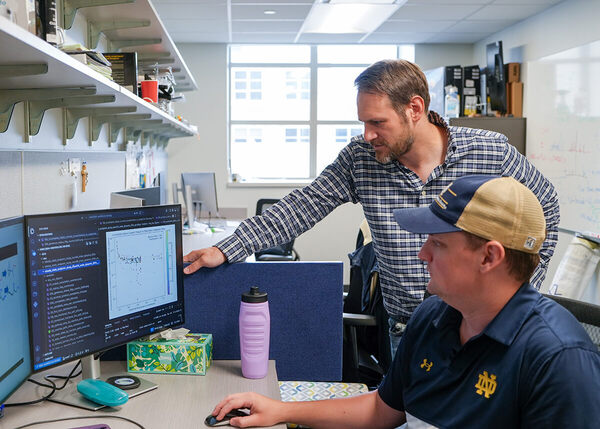
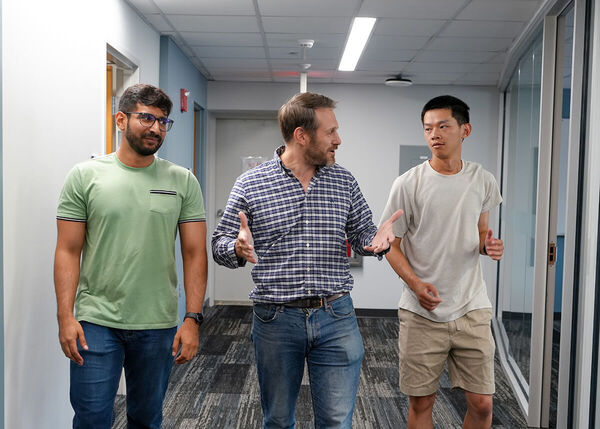
One founding project illustrates this combination. Brett Savoie, director of the SAI Initiative and the Coyle Mission Collegiate Professor of Engineering, is working with students Yun-Ke Liu and Bryan Piguave to extract chemical reaction data from the scientific literature.
Reaction data is a bottleneck for applications in drug discovery, materials synthesis, and advanced chemical manufacturing. Determining how to make a molecule of interest remains a fundamental barrier in chemistry, yet relatively little of the field's accumulated knowledge of reactions are available in a form that can be used directly by AI systems.
Chemical structures are commonly embedded as graphics that machines cannot natively interpret. Reaction definitions, conditions, limitations, and characterization may be scattered across figures, tables, experimental sections, and supporting information. Existing datasets reflect these constraints. Some are generated heuristically from reaction templates, while others contain structures without enough context to interpret a reported transformation.
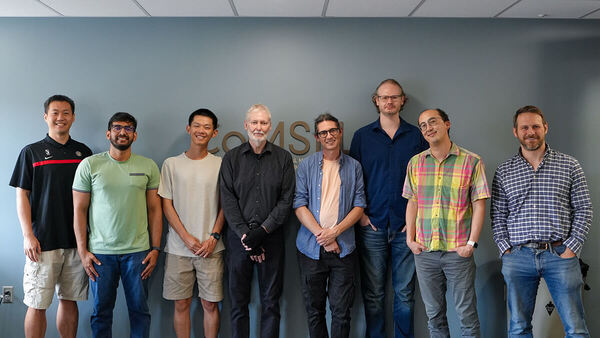
Notre Dame faculty Meng Jiang, Brett Savoie and Chris Sweet with graduate students of the Savoie Research Group
The Savoie Research Group is developing a systematic alternative whose goal is to curate data for every standard chemical reaction class reported in the literature. Liu and Piguave are building specialized workflows based on vision-language models to locate reaction information across the textual and visual formats used in publications and assemble each reaction with its context into consistent records. Unlocking this reaction information could be transformational for ongoing drug development efforts where making molecules of interest is still often the bottleneck.
The data extraction community projects are expected to continue through the summer and fall semester. Participation is open to all experience levels, with several core projects led by teams with experience in this area and new projects being launched. Notre Dame faculty, students, postdoctoral researchers, and staff who are developing extraction workflows, working with difficult domain data, or interested in contributing to a founding project are invited to participate. To join, contact Laura Kresnak at lkresnak@nd.edu.
Originally published by Brett Savoie at sai.nd.edu on July 14, 2026.
]]>
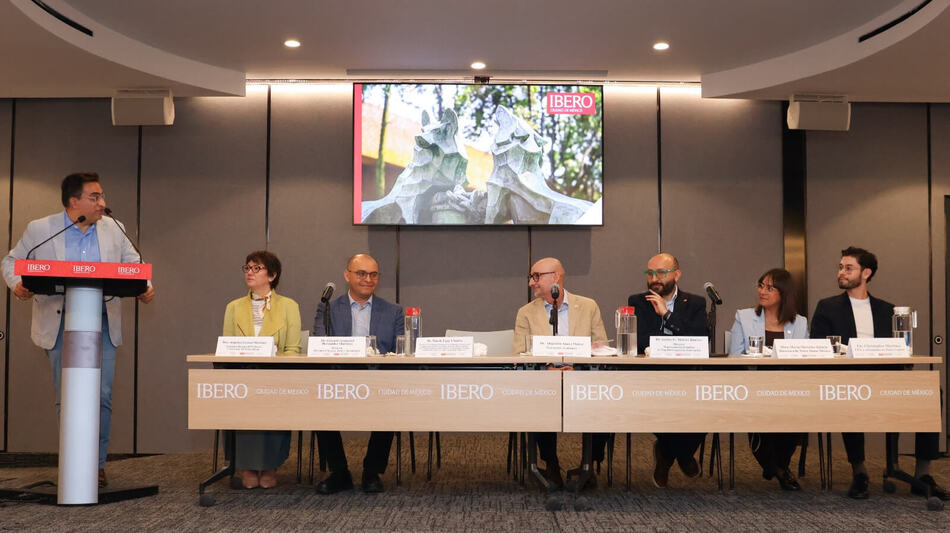
Brett Savoietag:data-ai-computing.nd.edu,2005:News/1829842026-07-10T13:09:00-04:002026-07-16T15:07:32-04:00From conversation to collaboration: Notre Dame and IBERO launch a school for AI
About a year and a half ago, a conversation started. Not in a conference room or on a formal agenda, but the way most academic partnerships often begin— over dinner, between researchers, comparing notes, wondering out loud about their agendas.
The question at the center of the conversation was simple: what could artificial intelligence (AI) become if the people building it were asking the right questions? That was enough to encourage faculty at Notre Dame's Lucy Family Institute for Data & Society and colleagues at the Universidad Iberoamericana in Mexico City to explore their shared concerns. What turned intention into action came a few months later, in October 2025, when IBERO faculty traveled to Notre Dame to participate in the inaugural RISE AI Conference, hosted by the Lucy Family Institute. RISE AI, which addresses the responsible, inclusive, safe, and empowering use of AI, brought together researchers and practitioners to explore how artificial intelligence can address complex societal challenges without sacrificing ethics.
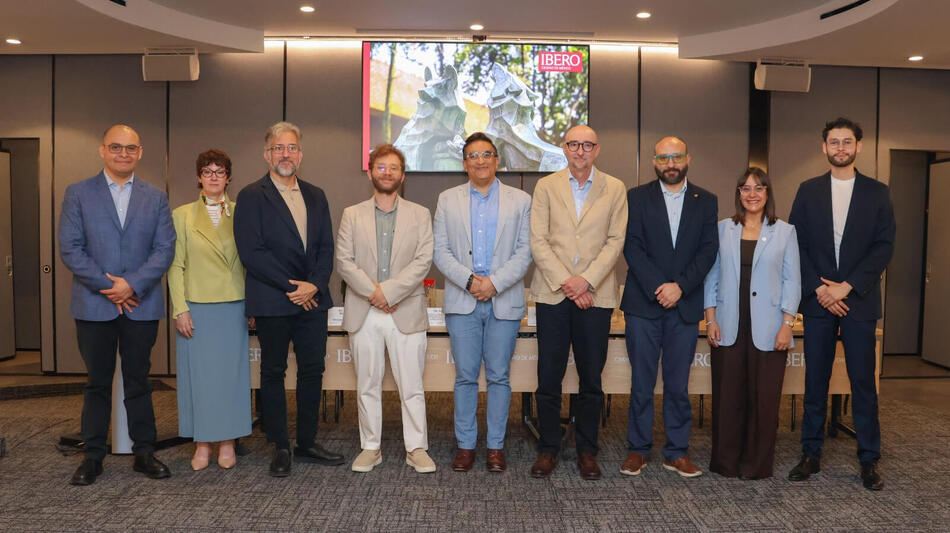
IBERO faculty came not as observers but as contributors, presenting their work alongside colleagues from institutions across the world and meeting with Notre Dame faculty on campus. By the time they returned to Mexico City, the outline of a real collaboration had taken shape. Nitesh Chawla, Ph.D., founding director of the Lucy Family Institute, assigned a lead to organize what would become the school. The rest moved quickly. Last month, the Escuela Anual de Inteligencia Artificial para el Bien Común—the Annual School of Artificial Intelligence for the Common Good—was launched as a joint initiative between both universities and drew 270 applicants for 40 spots.
“AI is a powerful technology, but its true value will depend on the human purpose that guides it.” —Andrés Molano, IBERO
The program was designed not to produce AI enthusiasts, but to form something rarer: people who think critically about what they build and why. Open to undergraduate and graduate students, faculty, industry professionals, and decision-makers, it combines public lectures by specialists from academia and industry with hands-on technical workshops focused on deep learning and large language models. But always with an eye toward social impact, particularly the challenges facing Mexico and Latin America.
It is not coincidental that Notre Dame's contribution to RISE AI is anchored in the Lucy Family Institute and its founding director’s strategic focus on how technology can address societal challenges as a force for good. Recently, Chawla became the director of Notre Dame’s Data, AI, and Computing Initiative — an opportunity that will further advance nearly two decades of research in AI, data science, and network science.
This is also the founding premise of the school. When the conversations between Notre Dame and IBERO faculty began about a year and a half ago, they didn't have to search for common ground; they were already standing on it.
At the inauguration, Chawla reflected on the shared commitment to building a vision of AI centered on the common good and on the principles of social responsibility that both Notre Dame and IBERO hold. He also spoke about the pressure AI’s rapid advance is placing on universities—not just to keep pace, but to rethink how they prepare students, in all fields, for a world being reshaped by these tools. The problems that matter most, he argued, don't belong to any single discipline, and addressing them requires interdisciplinary collaboration; AI can be a powerful instrument in that work. Chawla also recognized the unique position universities have to lead the ethical and socially responsible development of AI since their purpose is rooted in community wellbeing rather than profit.
That perspective resonates deeply at IBERO. Andrés Molano, Ph.D., director of the Department of Engineering Studies for Innovation and one of the architects of the school, expressed during his speech, “AI is a powerful technology, but its true value will depend on the human purpose that guides it.” IBERO is not interested in becoming an uncritical promoter of these tools; its goal is to train people who can develop, analyze, and use AI systems with a humanist and socially responsible lens.
The Annual School of Artificial Intelligence for the Common Good is just a small part of a broader institutional bet. IBERO has announced a new undergraduate degree in AI Engineering, a specialized data and AI laboratory equipped with advanced infrastructure, and a commitment to making everything that emerges from the Notre Dame collaboration (recordings, notebooks, materials) freely available online so that the knowledge generated doesn't stay in the classroom but benefits society as a whole.
For Notre Dame Mexico, the launch represents exactly the kind of partnership that defines Notre Dame's presence in this country: not a transfer of knowledge from one institution to another, but a genuine collaboration between peers who share a conviction. The university's engagement in Mexico has long been built on the belief that the most important questions—about equity, opportunity, democracy, human rights, and technology—are best answered together.
Originally published by Norma Sofía Rivera Padilla at mexico.nd.edu on July 10, 2026.
]]>
Norma Sofia Rivera Padillatag:data-ai-computing.nd.edu,2005:News/1828032026-06-30T10:36:00-04:002026-06-30T10:36:22-04:00Ahmed Abbasi appointed the director of Notre Dame’s Lucy Family Institute for Data & Society and deputy director of the Data, AI, and Computing InitiativeAhmed Abbasi, the Joe and Jane Giovanini Professor of IT, Analytics and Operations in the Mendoza College of Business, has been named the director of the University of Notre Dame’s Lucy Family Institute for Data & Society and deputy director of the Data, AI, and Computing (DAC) Initiative.
Dedicated to advancing the responsible use of data science and artificial intelligence (AI), the Lucy Family Institute develops transformative research, educational opportunities and community partnerships that address society’s most vexing challenges.
Abbasi succeeds the founding director of the institute, Nitesh Chawla, the Frank M. Freimann Professor of Computer Science and Engineering, who has led the Lucy Family Institute for six years. In September 2025, Chawla was appointed to lead the DAC Initiative, serving as the Lucy Family Director for Data and AI Academic Strategy. The initiative — which combines research and curriculum across colleges, schools, centers and disciplines — advances purposeful data, AI and computing through foundational research, interdisciplinary collaboration and real-world translation to address pressing societal challenges. The Lucy Family Institute, along with the Scientific AI Initiative and several AI-focused labs and services, is part of the broader DAC Initiative.
Abbasi is a distinguished scholar of analytics, machine learning and human-centered AI. He has spent more than two decades conducting research to advance innovative approaches to trustworthy and responsible AI, predictive analytics and digital technologies that improve human well-being. Since joining Notre Dame, Abbasi has served as director of the Ph.D. in Analytics program and co-director of the Human-centered Analytics Lab. Abbasi will continue serving in these roles while taking on his new leadership appointments.
As director of the Lucy Family Institute, Abbasi will provide strategic and operational leadership to advance the institute’s mission of adventurous collaboration across campus to further data-driven and convergent research. Additionally, he will continue to foster team growth and pursue opportunities that deepen the impact of the institute’s commitment to leveraging data and AI as a force for good.
“Ahmed is a superb scholar-teacher and collaborative leader with a deep commitment to ensuring that data and AI serve the common good,” said John T. McGreevy, the Charles and Jill Fischer Provost. “He is well-positioned to lead the Lucy Family Institute, continuing to build on Nitesh’s excellent work as founding director and helping the University realize its aspirations in data science and AI.”
Abbasi completed his doctorate in information systems at the University of Arizona’s Artificial Intelligence Lab. He received an M.S. in operations research from Columbia University and an MBA and a B.S. degree from Virginia Tech.
“I am honored to serve as director of the Lucy Family Institute and to build upon the remarkable foundation established by Nitesh and the institute team,” Abbasi said. “The opportunities created by data science and AI are extraordinary, but realizing their full potential requires thoughtful, collaborative and responsible approaches. I look forward to working with colleagues across the University and with external partners to advance research and solutions that benefit society.”
With Lucy Family Institute situated within the DAC Initiative, Abbasi will also serve as a deputy director of DAC, working closely with Chawla to help shape and execute the initiative’s strategic priorities. He will collaborate with DAC’s other deputy directors, Paul Brenner, director of the Center for Research Computing, and Brett Savoie, the Coyle Mission Collegiate Professor of Engineering in the Department of Chemical and Biomolecular Engineering and director of the Scientific AI Initiative, to shape programs across relevant units and provide guidance on selected projects and opportunities that advance Notre Dame’s ambitions as a trusted leader in emerging technologies.
“Ahmed is an exceptional scholar, thoughtful leader and collaborative colleague whose work in human-centered AI and responsible analytics aligns strongly with the mission of the Lucy Family Institute,” Chawla said. “I am excited to work with him in this next chapter and confident that under his leadership the institute will continue to grow its impact across Notre Dame and beyond. Serving as the Lucy Family Institute’s founding director has been one of the great honors of my career, and I remain deeply grateful to the extraordinary team that helped build the institute, as well as to Bob and Sara Lumpkins for their vision and generosity in establishing it.”
While the technologies continue to evolve, Abbasi believes the institute’s guiding purpose remains constant: ensuring that innovation catalyzes societal impact and advances human flourishing.
“Our goal is not simply to advance technology, but to advance technology in ways that strengthen communities and improve human well-being,” Abbasi said. “That mission will continue to guide the institute’s work as we pursue ambitious research and meaningful societal impact.”
For more information about the Lucy Family Institute for Data & Society, visit the institute website.
Originally published by Christine Grashorn at news.nd.edu on June 30, 2026.
]]>
Christine Grashorntag:data-ai-computing.nd.edu,2005:News/1824552026-05-29T16:13:00-04:002026-06-11T16:13:35-04:00Notre Dame convenes industry leaders, alumni, and faculty for roundtable discussion to shape the future of AI-ready educationA roundtable hosted by the Data, AI, and Computing Initiative highlights how artificial intelligence is transforming workforce expectations and the University’s approach to curriculum and learning.
In April, the University of Notre Dame’s Data, AI, and Computing Initiative welcomed over 40 industry leaders from across sectors, including energy, finance, government, insurance, nonprofit and pharmaceuticals, for an “Industry Leaders Roundtable” with University faculty and alumni.
The event featured panel discussions and small-group sessions on the opportunities and challenges of artificial intelligence (AI) in industry settings. Across these conversations, participants discussed how AI is fundamentally restructuring the nature of work. Rather than focusing solely on task execution, employees are increasingly expected to oversee AI systems, manage workflows, governance, and interpret outputs.
Mike Bechtel, former Deloitte chief futurist and adjunct Notre Dame professor, speaks at the Industry Leaders Roundtable
“The skills that I’m looking for in the data and AI space—for those who join my team—the first is curiosity: asking interesting questions and having interesting, non-obvious answers. I’m looking for somebody who is intentionally that ‘sand in the oyster,’” said Mike Bechtel, former Deloitte chief futurist and adjunct Notre Dame professor. “Secondly, I’m looking for empathy. Who better than humans to understand fellow humans? And then third, initiative. I’m not looking for people to wait for permission to get busy using tomorrow’s tools. I want people who can grab these technologies by the seat of their pants and make change without waiting to be asked.”
A panel discussion with Tracy Graham, founder and managing partner, Graham Allen Partners; Lynne Nowak, M.D., chief data and analytics officer, Surescripts; Robert Slone, senior vice president and chief scientist, UL Solutions; and Darshan Shah, executive vice president of data and AnalytiXIN for the CEOs of Indiana Corporate Partnership, highlighted the growing need for employees who combine technical literacy with adaptability, systems thinking, and strong communication skills.
Participants repeatedly emphasized the importance of “T-shaped” individuals who can pair technical depth with the ability to think critically, communicate effectively, collaborate across disciplines, and navigate complex and evolving environments as AI transforms the workplace — a model reflected in programs such as the iTREDS Scholars Program within the University’s Lucy Family Institute for Data & Society, which combines data science training with ethics, communication, and community engagement.
“I do think that interpersonal skill—the ability to communicate and work broadly around the world is important today. It will be even more important going forward. We don’t want just a series of algorithms running our company. We have people, we work with people in other companies, we serve markets that are made of people, so those very human skills will retain their value,” said Robert Slone, senior vice president and chief scientist at UL Solutions, and affiliated faculty member of the Lucy Family Institute.
Keynote speaker Chris Donnelly, senior managing director at Accenture, expanded on this theme in his talk, “Humans + AI: Rethinking Talent in a Transformed World,” emphasizing that the future workforce will be defined not by competition with AI, but by effective collaboration with it to improve future performance and accelerate efficiency of work.
A panel of recent Notre Dame graduates described entering their current roles with strong analytical and theoretical foundations, but with less experience applying that knowledge in real-world settings. Panelists Emily Nowak ’24, director of product at Optura AI; Joel Brogan ’19, AI security researcher at OpenAI; Christian Farls ’25, software engineer at KPMG; and Grace Bezold ’24, applied machine learning research scientist at Johns Hopkins Applied Physics Laboratory, consistently pointed to experiential learning opportunities—especially internships and team-based projects—as the most valuable preparation for workplace demands.
Attendees from Notre Dame included deans, department chairs, faculty, and associate provosts. Nitesh Chawla, the Frank M. Freimann Professor of Computer Science and Engineering and Lucy Family Director for Data & AI Academic Strategy, Patrick Flynn, the Fritz Duda Family Professor of Engineering in Computer Science and Engineering, and David Go, vice president and associate provost for academic strategy, helped lead discussions throughout the event.
Chawla, who is also the founding director of the Lucy Family Institute, said opportunities like the Industry Roundtable reflect the University’s broader commitment to advancing AI in ways that are both technically rigorous and socially responsible. “As data, AI, and computing reshape every sector of work and society, Notre Dame has a distinctive responsibility to prepare students not only to build and shape new technologies, but to lead with judgment, creativity, and a deep commitment to human dignity and the common good,” he said. “By bringing together industry leaders, alumni, and faculty, this roundtable is helping us shape a curriculum that combines technical depth, real-world experience, and the enduring values of a liberal arts education.”
For more information about the Data, AI, and Computing Initiative, please visit go.nd.edu/DAC.
Contact:
Christine Grashorn, Program Director, Engagement and Strategic Storytelling Lucy Family Institute for Data & Society / University of Notre Dame cgrashor@nd.edu / 574.631.4856 lucyinstitute.nd.edu / @lucy_institute
About the Data, AI, and Computing Initiative
Notre Dame's Data, AI, and Computing Initiative pursues an ambitious research and education agenda that balances ground-breaking foundational advances in data, AI, and computing with transformative interdisciplinary applications targeting societal challenges.
]]>
Christine Grashorntag:data-ai-computing.nd.edu,2005:News/1824562026-05-27T14:15:00-04:002026-06-11T16:14:21-04:00Researchers at Notre Dame’s Lucy Family Institute partner with Mastercard to advance global responsible AI
Global companies face a modern problem: artificial intelligence (AI) tools meant to drive efficiency across their operations often work better in some languages and regions than others. From English native-speaking employees reaching higher productivity gains from AI-generated insights than their non-native speaking colleagues to fraud detection systems missing region-specific patterns due to data and behavioral restrictions, these gaps create new risks for productivity, fairness, and overall business performance.
Now, the University of Notre Dame’s Lucy Family Institute for Data & Society is partnering with Mastercard to study how AI systems can be designed and governed to perform more consistently across languages and regions. The collaboration focuses on improving outcomes for non-native English speakers and developing model transfer and retraining approaches that allow AI to operate effectively across jurisdictions without compromising data protections.
“As AI becomes foundational to how businesses operate and decisions are made, ensuring performance, safety, and consistency at a global scale is critical,” said Mastercard’s Chief Data Officer, Andrew Reiskind. “At Mastercard, we’re helping define what responsible AI looks like in practice by advancing approaches that work across languages, regions, and regulatory environments. This collaboration strengthens our leadership in building AI systems that are not only powerful, but reliable, market-relevant, and ready for real-world deployment at scale.”
The University principal investigators include Nitesh Chawla, the Frank M. Freimann Professor of Computer Science and Engineering and Lucy Family Director for Data & AI Academic Strategy, leading the the Data, AI and Computing Initiative, Nuno Pereira Moniz, associate research professor for the Lucy Family Institute for Data & Society and associate director, Data, Inference, Analytics, and Learning (DIAL) Lab and Ting Hua, assistant research professor, Lucy Family Institute for Data & Society.
The research will work to generate evidence on how generative AI performs across language groups, identifying barriers faced by non-native English speakers, and translating those insights into practical tools and governance strategies for more inclusive deployment. The partnership may also produce research to evaluate federated learning in real-world regional settings, producing evidence on system performance and outcomes while informing new frameworks, product guidance, and industry standards for responsible AI development.
Chawla is also the founding director of the Lucy Family Institute for Data and Society. Reflecting on the Institute’s commitment to responsible, inclusive, safe, and empowering (RISE) AI, he emphasized that “the next frontier of AI is not just scale, but responsibility at scale. Responsible AI requires us to understand not only how models perform in ideal conditions, but how they behave across a diversity of real-world deployment settings, and how they empower individuals, communities, and organizations. This work brings together data, systems, and governance to ensure AI works as well in every language, region, and context as it does in the lab.”
For more information about research within the Lucy Family Institute for Data & Society, please visit the website.
Contact:
Christine Grashorn, Program Director, Engagement and Strategic Storytelling Lucy Family Institute for Data & Society / University of Notre Dame cgrashor@nd.edu / 574.631.4856 lucyinstitute.nd.edu / @lucy_institute
About the Lucy Family Institute for Data & Society
Guided by Notre Dame’s Mission, the Lucy Family Institute adventurously collaborates on advancing data-driven and artificial intelligence (AI) convergence research, translational solutions, and education to ethically address society’s vexing problems. As an innovative nexus of academia, industry, and the public, the Institute also fosters data science and AI access to strengthen diverse and inclusive capacity building within communities.
]]>
Grashorn, Christinetag:data-ai-computing.nd.edu,2005:News/1824582026-05-25T10:00:00-04:002026-06-11T16:15:37-04:00Notre Dame experts respond to Pope Leo XIV’s encyclical Magnifica humanitas
On Monday (May 25), Pope Leo XIV released his first encyclical, Magnifica humanitas (Magnificent humanity), which provides moral guidance to bishops, clergy and the faithful on safeguarding the human person in the time of artificial intelligence (AI).
The encyclical was officially signed on May 15, the 135th anniversary of Pope Leo XIII’s encyclical responding to the industrial revolution, Rerum novarum.
Below, University of Notre Dame faculty experts from the College of Arts and Letters, College of Engineering, Keough School of Global Affairs and Law School offer their insights into the document.
Rev. Daniel Groody, C.S.C.
Rev. Daniel Groody, C.S.C., serves as vice president and associate provost for undergraduate education and professor of theology and global affairs. In addition to his role at Notre Dame, Father Groody is a member of the Vatican’s Dicastery for Promoting Integral Human Development and plays a key role in Notre Dame’s partnership with the Vatican’s Laudato Si’ Center on issues of integral ecology and global sustainability. His research focuses primarily on migration, theology, refugees and human displacement.
“Pope Leo’s Magnifica humanitas calls us to continually discern what it means to be human before God in a world increasingly shaped by artificial intelligence,” Father Groody said. “While this new digital age offers unprecedented possibilities for development, it simultaneously demands that we rediscover the true contours of our humanity. This authentic identity — rooted in an interior life, a moral conscience, human connections and a transcendent relationship to divine love — can never be quantified, modeled or replicated by machine learning. Against the technocratic impulse to reduce the human person to a mere data point, the encyclical boldly reasserts that we cannot be measured solely by technological acceleration but by holistic human development, human dignity and our commitment to the common good.
“Alongside new innovations, artificial intelligence reveals ancient temptations of radical self-sufficiency and idolatry. Warning against the modern temptation to construct a digital Tower of Babel in the pursuit of technological mastery, Pope Leo calls us instead to channel our energies into building the Kingdom of God and animating a ‘Civilization of Love.’ This sacred task requires an unwavering willingness to denounce the false forms of power that isolate us in algorithmic silos and blind us to our neighbors. In their place, Magnifica humanitas proposes a vision of life firmly anchored in justice, ultimately steering humanity toward the right ordering of our relationships with one another, with technology and with the Creator.”
Paolo Carozza
Notre Dame Law School professor Paolo Carozza is a member of the Pontifical Academy of Social Sciences and also the chair of the Meta Oversight Board. Both his research and policy work are focused on the intersection of Catholic social thought and technology, especially social media and AI.
“I am convinced that this will prove to be a defining document for our era, a profound and prophetic document,” Carozza said. “It is not just for Catholics, but speaks to the concerns of all of humanity.
“We are living in a time of daily dramatic transformations in every aspect of our lives because of AI, where the very understanding of what it means to be human is being called into question. This is coupled with a real vacuum of moral leadership on the global stage. In that context, Pope Leo is offering a clear, comprehensive and coherent voice urging us to take responsibility for constructing a world in which technology will serve humans rather than degrade them.
“From here on, I don’t think anyone will be able to speak meaningfully about the future of humanity in the age of AI without coming to terms with this document and taking it seriously. While it is very direct about the many dangers already arising out of algorithmic technologies, it is decidedly not an anti-technology document. The real question is not whether AI is good or bad, but whether the ways we develop and deploy the technology help individuals and communities become more humane, just and participatory, or whether instead they foster exclusion, control and inequality.
“The overarching core message is that if we are to preserve our humanity, we must not allow people to be reduced to mere data and commodities to be instrumentalized and exploited. It is a very hopeful document, not a doomsaying one. Pope Leo insists that moral progress here is possible, and the negative consequences of AI technologies are far from inevitable.”
Meghan Sullivan
Meghan Sullivan is the Wilsey Family College Professor of Philosophy and director of the Notre Dame Institute for Ethics and the Common Good. She leads a national research and public engagement initiative on AI and human dignity and meets regularly with tech leaders and AI developers in Silicon Valley. In March, Sullivan attended an Anthropic summit to discuss how to guide the moral development of the corporation’s chatbot, Claude.
“Magnifica humanitas is one of the most compelling and comprehensive treatments of AI ethics I have ever read — and I say that as someone who has spent the past few years immersed in this literature from both philosophical and policy perspectives,” Sullivan said. “Pope Leo XIV grounds AI ethics in the Church’s long-standing social doctrine, which has consistently offered a profound vision of human dignity.
“Christian tradition has never grounded human dignity in cognitive performance or economic productivity. It has never said: You matter because of what you can do. It says: You matter because of who you are. Someone with a body, mind and soul. Someone built for love. Someone with a mind oriented toward truth, accountable for our choices. We’re vulnerable in a way that these AI models are not. And Pope Leo argues that this special belovedness — made in God’s own image — makes us magnificent.
“What strikes me most is how practical this document is. It gives concrete guidance to corporate leaders, to policymakers, to educators, to everyday people navigating this technology. For those of us at Notre Dame, the pope’s charge to educational institutions is especially urgent. He argues that schools must resist the pressure to simply accelerate alongside the digital world and instead become irreplaceable centers of human formation — places where knowledge is integrated, where real relationships are built, where students discover the meaning of human dignity.
“This is exactly the work that Notre Dame’s DELTA network exists to do. With a generous $50.8 million grant from Lilly Endowment Inc., we are going to put this teaching on human dignity and AI into action — across K-12 schools, universities, churches and the public square. Today’s encyclical gives us both the theological framework and the moral insight we need. Notre Dame is ready to help the Church and the world answer Pope Leo’s call.”
Nitesh Chawla
Nitesh Chawla, an expert in artificial intelligence, data science and network science, is the Frank M. Freimann Professor of Computer Science and Engineering, director of the Lucy Family Institute for Data & Society and the Lucy Family Director for Data & AI Academic Strategy, leading the Notre Dame Data, AI and Computing Initiative. He uses advancements in AI, data science and network science to pursue common good through interdisciplinary research by collaborating with community and national partners.
“Magnifica humanitas makes clear that AI cannot be treated as morally neutral,” Chawla said. “Because these systems embody choices about what they measure, ignore and optimize and how they classify people and situations, they must be transparent, accountable and subject to meaningful evaluation.
“That is the work of Responsible, Inclusive, Safe and Empowering AI — RISE AI — at Notre Dame. Anchored in the Lucy Family Institute for Data & Society, RISE AI asks four practical questions: Who answers for an AI system across its lifecycle? Who is represented and served? Who is protected from harm? Who gains or loses agency? AI governance claims are only as good as the evidence chain that connects them to what the system does. RISE AI builds that chain. That chain runs through audit logs, red-teaming, subgroup performance, accessibility, redress and user-agency measures that show what a system actually does and where its limits are.
“The encyclical’s most important insistence is that moral and technical questions cannot be separated; they meet in how systems are evaluated, audited, deployed, made contestable and governed. As paragraph 109 puts it, social justice must ‘shape the very design’ of these systems from the outset, not be retrofitted after deployment. That means building AI that is not only powerful but legible, accountable and directed toward integral human development and the common good — making responsibility measurable, inclusion visible, safety testable and empowerment real.
“As Magnifica humanitas insists, responsibility must be ‘clearly defined at every stage.’”
Kathleen Sprows Cummings
Kathleen Sprows Cummings is a professor of American studies and history and director of the Global Catholic Research Initiative. A papal analyst for NBC/MSNBC, she offered expert commentary during the 2014 canonization of Popes John Paul II and John XXIII, Pope Francis’ U.S. visit in 2015, Pope Francis’ funeral in 2025 and the conclave that elected Pope Leo XIV.
“‘Age gives way to age,’ wrote Pope Leo XIII in Rerum novarum, ‘but the events of one century are wonderfully like those of another, for they are directed by the Providence of God.’ In Magnifica humanitas, an encyclical dated exactly 135 years after Rerum novarum, Pope Leo XIV also invokes God’s invisible work in history,” Cummings said. “And, like his namesake, he considers the central challenge of the age — in this case, the advent of artificial intelligence — in light of the Church’s timeless principles.
“More humble in tone than Rerum novarum, Magnifica humanitas is a far more capacious document that operates on several levels at once: an explanation of Catholic social teaching as it has developed since Rerum novarum; an affirmation of the intrinsic, God-given value of each person, which is not tied to what they achieve or produce; a rumination on the wonder and limitations of being human; a meditation on history, including an unflinching acknowledgement of the Church’s complicity in its darker moments; and an invitation to individuals and institutions to think creatively and collaboratively about how to ‘disarm’ new technologies and harness them for good.
“In his powerful conclusion, Pope Leo entrusts this endeavor to Mary, quoting from the Magnificat, her revolutionary ‘song of hope’ which glorifies the God who delivers the humble and oppressed, dislodges the privileged from their positions of power, and continues to make all things new in this and in every age. In that sense, Magnifica humanitas ultimately offers consolation to a world in desperate need of it.”
Arun Agrawal
Arun Agrawal, the Pulte Family Professor of Development Policy and director of the Just Transformations to Sustainability Initiative, studies environmental politics, sustainable development and transformative change. He has spent time with Catholic leaders discussing ways to care for our common home globally and across all disciplines and can address how AI technology is impacting the environment.
“The words ‘common good’ appear in Pope Leo’s encyclical, Magnifica humanitas, more often than the words ‘artificial intelligence’ or ‘AI,’ more often than ‘church,’ and more often than ‘religion,’” Agrawal said. “In its mention of the common good, the encyclical resonates with Pope Francis’ call for care for our common home. This continuity and this focus on the common — on the community of which we are all a part — is a characteristic feature of what it means to be human, to be part of the interconnectedness of all creation.
“Fundamentally, the encyclical is a call to heed and act for the common good. It is a call to move away from the kind of politics that advances only the fortune and interests of a select few. Increasingly, our politics pushes to the side the grandeur of humanity and promotes markets that profit the elite instead of supporting the common good.
“It prophetically recognizes that the ‘invisible hand’ of the market is in fact about the visible hand of politics that helps the marriage of finance and technology. It instead asks for our politics that would direct technology and finance and artificial intelligence to support the common good so as to achieve the grandeur of humanity. It is only by attending to this call that we have any hope of maintaining the dignity of the whole person.”
Contact: Carrie Gates, associate director of media relations, 574-993-9220, c.gates@nd.edu
Originally published by Notre Dame News at news.nd.edu on May 25, 2026.
]]>
Notre Dame Newstag:data-ai-computing.nd.edu,2005:News/1824592026-05-25T06:30:00-04:002026-06-11T16:16:17-04:00Statement from Rev. Robert A. Dowd, C.S.C., on the papal encyclical Magnifica humanitas
“In Magnifica humanitas, Pope Leo XIV has given us a profound gift: a teaching that reminds us that every human life possesses an inviolable dignity and that safeguarding this dignity must be the foundation of every decision we make as we develop and apply artificial intelligence.
“Signing this encyclical on the 135th anniversary of Rerum Novarum, Pope Leo XIII’s historic letter on the rights of workers, is a deliberate choice. Just as Leo XIII addressed the disorientation of the industrial revolution, Leo XIV calls us to moral clarity and solidarity in the midst of this latest societal transformation, underscoring the urgency of the questions humankind faces.
“At Notre Dame, our mission as a global Catholic research university compels us to advance Pope Leo XIV’s historic contribution to Catholic social tradition through our research, our teaching, and all of our work in service of the common good. The Holy Father has highlighted the critical role that Catholic scholars and researchers — and all those of goodwill — must play in raising moral questions and actively shaping new technologies to ensure they serve the entire human family.”
Rev. Robert A. Dowd, C.S.C. President, University of Notre Dame
Originally published by Notre Dame News at news.nd.edu on May 25, 2026.
]]>
Notre Dame Newstag:data-ai-computing.nd.edu,2005:News/1811402026-04-27T15:27:00-04:002026-04-27T15:27:53-04:00Lucy Family Institute and Berthiaume Institute’s Health Data & Analytics Challenge Empowers Notre Dame Students to Turn Data into Public Health Solutions
From mapping malaria outbreaks to analyzing environmental health trends, University of Notre Dame students are using data to confront some of today’s most urgent health challenges.
Students prepare to present final presentations for the Health Data & Analytics Challenge, February 2026
During the month-long challenge, graduate mentors guided students in refining research questions grounded in real-world datasets, including malaria incidence and vector-borne disease data, environmental health indicators, and IQVIA opioid prescription data.
Ben Herbst, ’26 and Kate Norman, ’26, Health Data & Analytics Challenge, February 2026
In late February 2026, nine student teams presented their research findings to a panel of distinguished academia and industry judges. The teams were scored on methodology, question design, discussion of results, and evaluation of error or bias.
“As a data professional and a physician, it was exciting for me to see how adeptly the students worked with complex health datasets,” said Lynne Nowak, M.D., chief data and analytics officer for Surescripts. Nowak, who served as a judge for the challenge, added that, “Judging the final presentations gave me a front-row seat to their creativity and analytical skill — they impressed me with their ability to turn data into actionable insights that could make a real-world difference.”
Patrick Duffy, ‘26; Daniel D’Alessio, 28’ and Austin Baron, 28’ present their winning project, “Health vs. Wealth: A Housing First Strategy for Malaria Mitigation in Kenya" at the Health Data & Analytics Challenge, February 2026
The winning project, “Health vs. Wealth: A Housing First Strategy for Malaria Mitigation in Kenya,” presented by Patrick Duffy, ‘26; Daniel D’Alessio, 28’; and Austin Baron, 28’ used malaria incidence datasets to consider the extent to which structural vulnerabilities undermine the effectiveness of spatial repellents in driving both the speed and cumulative volume of malaria infections in Kenya.
“We participated in the Health Data and Analytics Challenge because of a shared desire to improve our data analysis skills on real datasets. Through our analysis of malaria incidence and housing vulnerability in Kenya, it was impactful to create an actionable recommendation that could help address a modern health issue. Our participation in the challenge was both an educational and meaningful experience,” said D’Alessio.
Toni Akintola, ’26 and Rachael Thumma, ’26 presenting the project, “From Risk to Resilience: AI-Driven Policies for Environmental Health Equity"
Two additional awards were presented, recognizing exceptional analysis of the provided data and for delivering the most compelling data story. The award for the best use of the datasets went to “Strategic Deployment of Spatial Repellents,” presented by Mason Gallo, ’26; Ben Herbst, ’26; Anesu Matara, ’26; and Kate Norman, ’26. The award for best data storytelling went to “From Risk to Resilience: AI-Driven Policies for Environmental Health Equity,” presented by Toni Akintola, ’26; Rachael Thumma, ’26; Aryan Patel, ’28; and Louis Cornett, ’26.
Reflecting on the experience, Cornett said, “This challenge gave us an opportunity to dive deep into real-world data, taking what we have learned in the classroom to fight for a healthier world. What was most impactful for us was the opportunity to chat with industry leaders about the efficacy of our solution in solving policy inefficiencies.”
Ben Herbst, ’26 and Anesu Matara, ’26 at the Health Data & Analytics Challenge, February 2026
Other judges included David Upjohn (ND 2012), cofounder and CTO at RXMapper; Cassandra Smiley, healthcare transformation & operations leader at Accenture; Ian Frost, senior advisor for The Boston Consulting Group; and Bharat Mishra, assistant professor of the practice in Genomics and Bioinformatics Core in the Department of Biological Science at Notre Dame.
The organizing committee for HDAC includes Donovan Leiva, research program manager for the Lucy Family Institute; Katie Liu, associate director of research programs for the Data, AI, and Computing Initiative; Prakash Nallathamby, associate director for the Berthiaume Institute; Keegan Wolohan, program manager and research associate for the Lucy Family Institute; and Siavash Ghorbany, Ph.D. candidate in Civil and Environmental Engineering.
“Seeing students transform complex data into insights that promote wellness and tackle health disparities is inspiring. It’s exactly the brand of real-world problem-solving we strive to foster in the next generation of researchers,” said Nallathamby.
Echoing that sentiment, Liu highlighted the importance of giving students the space to explore their own questions through data.“One of our goals for the Challenge is to allow students an opportunity to follow their curiosities to generate their own research questions. It was amazing to see all of the different questions that these teams pursued and to hear them reflect on how harnessing data responsibly can lead to impact.”
For more information about the Health Data & Analytics Challenge, please visit the Lucy Family Institute for Data & Society website.
Contact:
Christine Grashorn, Program Director, Engagement and Strategic Storytelling Lucy Family Institute for Data & Society / University of Notre Dame cgrashor@nd.edu / 574.631.4856 lucyinstitute.nd.edu / @lucy_institute
About the Lucy Family Institute for Data & Society
Guided by Notre Dame’s Mission, the Lucy Family Institute adventurously collaborates on advancing data-driven and artificial intelligence (AI) convergence research, translational solutions, and education to ethically address society’s wicked problems. As an innovative nexus of academia, industry, and the public, the Institute also fosters data science and AI access to strengthen diverse and inclusive capacity building within communities.
About the Berthiaume Institute for Precision Health
The Berthiaume Institute for Precision Health at Notre Dame seeks to prevent and treat disease, promote wellness, and reduce health disparities by developing new tools to understand human variability at the molecular and cellular levels. Institute members conduct research into the molecular, cellular, and environmental factors underlying each person’s health, particularly those in underserved populations, and work to ensure new discoveries, data, and technologies benefit all populations.
]]>
Grashorn, Christinetag:data-ai-computing.nd.edu,2005:News/1811442026-04-27T15:27:00-04:002026-04-27T15:27:42-04:00Data, AI, and Computing Initiative launches 19 faculty-led working groups
Nineteen faculty-led working groups will spend the spring semester identifying where and how Notre Dame can make an impact in data, AI, and computing research and scholarship.
The working groups, funded through a University-wide call from the Data, AI, and Computing Initiative, will surface where Notre Dame excels and where opportunities remain in faculty expertise, computing infrastructure, and the connective capacity for scholars to work across disciplinary boundaries.
The call drew a strong response from across the campus, with proposals from 29 teams representing 139 faculty members. The 19 funded working groups include lead faculty members from five colleges and schools, the Hesburgh Libraries, and several University-wide centers and institutes. Through these targeted investments, the Initiative aims to amplify the University’s existing strengths and cultivate interdisciplinary groups of faculty to identify areas of opportunity to further research and scholarship in data, AI, and computing.
The working group topics range from responsible, human-centered AI design and global AI ethics to applications of AI in peace and conflict research, urban sustainability, and scientific discovery. They span organizational and technical questions, including AI auditing, theoretical AI foundations, and data-driven methods across the sciences and humanities.
“At a moment when nearly every discipline seeks to engage with data, AI and computing, these working groups offer our faculty a way to lead and to identify where Notre Dame can make a distinctive contribution, grounded in our strategic framework and our values,” said Nitesh Chawla, Frank M. Freimann Professor of Computer Science and Engineering, and the Lucy Family Director for Data and AI Academic Strategy, leading the Data, AI, and Computing Initiative.
“The strength of the faculty response, with proposals from 29 teams spanning disciplines, tells us the appetite for this kind of collaboration is real. I look forward to the working group reports at the end of the semester, and I also encourage faculty to look for more opportunities like this ahead.”
The teams’ focus areas fall into five broader priority areas: AI-enabled science and engineering; foundational AI and next-gen computing; Responsible, Inclusive, Safe, and Empowering (RISE) AI; computational social science and digital humanities; and health data and AI.
By the end of the semester, the groups will share their findings and recommendations—insights that will help shape the Initiative’s direction as it evolves.
“These working groups began in mid-January and wrap in May, but the ambition behind them extends well beyond the semester,” Chawla said.
Part of the University’s Strategic Framework, the Data, AI, and Computing Initiative launched in fall 2025 to advance purposeful excellence in data, AI, and computing while catalyzing interdisciplinary collaboration and real‑world translation and application—all grounded in Notre Dame’s ambition to be a force for good.
The National Education Opportunity Network (NEON) recently named University of Notre Dame juniors Karita Nguyen and Emma Elizabeth Hudkins as recipients of Teaching Fellow Awards, recognizing their work with students at low-income (Title 1) high schools enrolled in Notre Dame’s Responsible and Ethical AI course.
The course has been made possible by a collaboration between a group of campus units, led by Notre Dame Learning’s Office of Digital Learning, and NEON, which partners with top universities to deliver actual college credit-bearing courses and supports to scholars in Title 1 high school classrooms across the nation.
Launched last fall, Responsible and Ethical AI was completed by approximately 180 students at 12 schools. Like all NEON courses, there was no cost to the students or their families to take it. Responsible and Ethical AI is scheduled to run again in fall 2026.
Central to the NEON model is the contributions of teaching fellows. These undergraduates, grad students, and alumni from partner colleges and universities across the country work with course instructors and onsite high school teachers to help guide enrolled students through the college coursework in live virtual sessions.
Notre Dame supported its Responsible and Ethical AI course with 14 teaching fellows drawn from the Lucy Family Institute for Data & Society’s iTREDS (Interdisciplinary Training and Research in Ethical Data Science) Scholars Program, including Nguyen and Hudkins.
Nguyen, who is majoring in applied and computational mathematics and statistics (ACMS) with a minor in actuarial science, was one of 27 teaching fellows nationwide to win the Most Outstanding Teaching Fellow Award, honoring those who consistently go above and beyond in instruction, communication, teamwork, and overall excellence.
She was also a recipient of the Collaborative Excellence Award for exemplifying teamwork, reliability, openness, and strong communication within her teaching community. She helped facilitate the Notre Dame course at Van Nuys High School in Van Nuys, California.
Hudkins, an ACMS major with minors in data science and digital marketing, was among the teaching fellows who received the Rising Star Award, which recognizes a first-semester or early career teaching fellow who shows strong growth, enthusiasm, adaptability, and promise. She supported students at Theodore Roosevelt High School in Washington, D.C.
Notre Dame’s Valya Kuskova, the instructor for Responsible and Ethical AI, had high praise for all the iTREDS scholars who served as teaching fellows and Nguyen and Hudkins in particular.
“This course worked as well as it did because of the teaching fellows who showed up for students every day,” said Kuskova, a professor of the practice and associate director of the Lucy Family Institute. “Their award-winning work reflects what we care about most: helping high school students engage with AI while learning to think carefully, responsibly, and ethically about how these technologies shape the world around them.”
A two-year interdisciplinary program, iTREDS prepares undergraduates at Notre Dame and Saint Mary’s College to become leaders in ethical and socially responsible data science through a unique combination of research, teaching, and community engagement. The program is directed by Sugana Chawla, an associate professor of the practice and data science education program director at the Lucy Family Institute, who coordinated the involvement of the iTREDS scholars with Sonia Howell, director of the Office of Digital Learning.
“I truly appreciate Sonia for providing this fantastic opportunity to our iTREDS cohort,” Chawla said. “It is incredibly well-deserved and meaningful for our students. Thank you as well to the entire team for the hard work, collaboration, and support that made this possible.”
Originally published by ND Learning at learning.nd.edu on February 23, 2026.
]]>
ND Learningtag:data-ai-computing.nd.edu,2005:News/1819592026-04-24T11:02:00-04:002026-05-21T11:02:24-04:00First Notre Dame - Pontificia Universidad Catolica de Chile SAI Winter School Launches in Santiago
The University of Notre Dame and Pontificia Universidad Catolica de Chile (UC Chile) held the first ND-UC Chile Winter School for Scientific Artificial Intelligence (SAI) in Santiago in January 2026, launching a new international training model to develop research and training opportunities at the interface of artificial intelligence and science and engineering between the two schools.
Hosted by Notre Dame’s Scientific Artificial Intelligence Initiative within the Data, AI, and Computing Initiative at UC Chile's San Joaquin campus, the inaugural program was structured as a three-day format, including two days of lectures and hands-on tutorials followed by a third day split between a student hackathon and a faculty workshop.
The winter school model is designed to connect classroom learning with research application, while creating a pipeline between undergraduate training, summer research, and doctoral study. The model fosters three linked goals: strengthening student exchange between the universities, providing doctoral fellows with meaningful teaching and mentorship experience, and accelerating cross-institution research collaboration through follow-on projects.
As the inaugural event, the Chile program extends the SAI winter school concept from the University of Puerto Rico (UPR) at Mayaguez (RUM).
Across the school, Notre Dame faculty and SAI fellows delivered ten presentations on SAI opportunities and persistent technical bottlenecks in their fields. The program also included practical tutorials in scikit-learn and PyTorch, plus applied sessions on methods such as featurization, transformers, and flow matching for scientific use cases. A poster session and reception on day one created an additional venue for participant exchange across institutions.
Notre Dame participants included Brett Savoie, the Coyle Mission Collegiate Professor of Engineering, Chemical and Biomolecular Engineering and SAI Initiative director, Diego Gomez-Zara, assistant professor in the Department of Computer Science and Engineering, Alex Taflanidis, professor of Civil and Environmental Engineering and Earth Sciences and director of graduate studies for Civil and Environmental Engineering, Robert Nerenberg, professor of Civil and Environmental Engineering and Earth Sciences, Diogo Bolster, the Frank M. Freimann Professor of Hydrology and Henry Massman Department Chair for the department of Civil and Environmental Engineering and Earth Sciences, and Fanny Ye, associate director of applied analytics for the Lucy Family Institute for Data & Society and Galassi Family Collegiate Professor in Computer Science and Engineering.
Graduate fellows from the SAI initiative also contributed, including Andrew Schofield, Shashank Ramesh, and Joey Farmer. The event was organized in collaboration with UC Chile engineering faculty Juan Montes and Felipe Gomez Caro.
The third day expanded beyond technical instruction into institutional planning. Student teams advanced hackathon projects and presented outcomes in a joint closing session, while faculty working groups developed shared priorities in AI education and research. Sessions focused on AI literacy for domain scientists and engineers, AI-enhanced pedagogy, data infrastructure and standards, and domain-specific research challenges, followed by proposal-oriented small group work.
The school also drew leadership participation from UC Chile and Notre Dame's Santiago network. Engineering Dean Loreto Valenzuela participated alongside other university leaders, and Juan Esteban Montes, director of Notre Dame's Santiago location, joined the broader engagement around partnership development.
With the Santiago launch complete, organizers now have a working template for recurring ND-UC Chile SAI programming. Applications for next year’s program are expected to come in the Fall.
To learn more about the SAI Initiative’s winter schools, please visit sai.nd.edu.
Originally published by Brett Savoie at sai.nd.edu on April 15, 2026.